
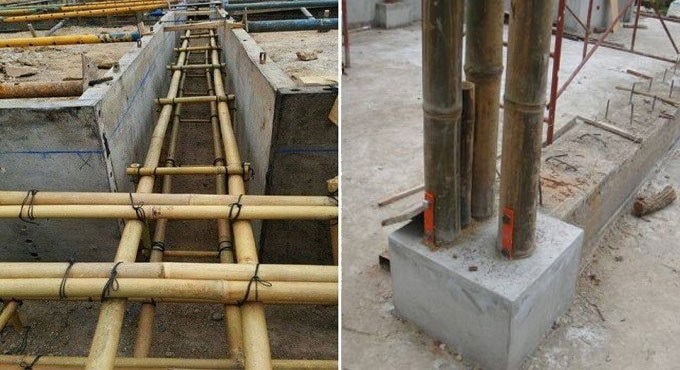
As Ghana explores sustainable construction solutions, bamboo has emerged as a promising material, catching the interest of contractors and clients alike. Known for its strength, cost-effectiveness, and environmental benefits, bamboo’s potential is exciting.
However, despite its appeal, experts caution against its use as a direct replacement for steel reinforcement in concrete. The Institution of Engineering and Technology, Ghana (IET-GH) recently advised builders not to use bamboo in place of steel due to concerns about its safety and structural reliability.
Bamboo’s Appeal in Construction
Bamboo’s fast growth and renewability make it a prime candidate for sustainable construction, offering both economic and environmental benefits. It has a high tensile strength-to-weight ratio and performs well in conditions with seismic activity and strong winds, which makes it appealing for certain structural applications.
Its cultivation could also drive economic opportunities through farming, processing, and marketing, contributing to Ghana’s GDP. Additionally, bamboo’s root system aids in soil conservation, and its carbon absorption capacity helps combat environmental degradation.
Yet, despite these attributes, using bamboo as reinforcement in concrete presents challenges that may outweigh its benefits if not addressed comprehensively.
IET-GH’s Warning and Areas of Concern
Henry Kwadwo Boateng, President of IET-GH, clarified that while bamboo can be valuable in some construction contexts, using it as a reinforcement for concrete is risky without the necessary standards, treatments, and technical guidelines.
Bamboo, unlike steel, is a natural, carbon-based material from the grass family, which decomposes over time in specific environments, such as those with high alkalinity or acidity. This inherent limitation means untreated bamboo is unsuitable as a substitute for steel, which is highly resistant to environmental degradation.
Boateng also emphasized bamboo’s tendency to absorb water from fresh concrete, which can cause it to swell. As it dries, bamboo shrinks, potentially leaving gaps between it and the surrounding concrete, weakening the overall bond and compromising structural integrity.
Research Findings: Potential and Barriers
Research by construction experts at Kwame Nkrumah University of Science and Technology (KNUST) provides insight into the possibilities and challenges of using bamboo in Ghana. Key findings highlight several factors that hinder bamboo’s adoption, particularly as a replacement for steel reinforcement.
1. Lack of Knowledge and Expertise
Most architects and building contractors lack formal training and experience in bamboo construction, limiting its practical use. This lack of knowledge means that even when bamboo is specified, implementation on-site may fall short, risking substandard results.
2. Inadequate Processing Facilities
Ghana currently lacks sufficient bamboo processing companies, which makes it challenging for construction professionals to obtain high-quality, treated bamboo suitable for structural applications. Without treatment, bamboo remains vulnerable to insect attacks, rot, and other durability issues, especially in harsh environments.
3. Durability Concerns
Untreated bamboo is susceptible to environmental degradation, which poses risks when used in construction. Experts advocate for effective treatment methods to minimize water absorption and improve the material’s lifespan, especially when used in high-stress conditions like concrete reinforcement.
4. Social and Industry Perceptions
Bamboo is often perceived as an inferior, low-cost material associated with poverty. This perception affects its acceptance in the broader construction industry, which tends to favour established materials like steel and concrete.
5. Competition from Conventional Materials
Bamboo competes with established materials like timber, steel, and concrete, which are more familiar and reliable in the Ghanaian construction sector. Demonstrating bamboo’s advantages and cost-effectiveness could help increase its popularity, but the shift would require significant evidence and advocacy.
Moving Forward: Recommendations for Safe Bamboo Use
To responsibly explore bamboo’s potential as a reinforcement material, several steps are essential:
1. Invest in Research and Development
Developing treatment methods to enhance bamboo’s durability is crucial. With better treatment, bamboo can be made resistant to decay, insects, and environmental conditions. Research is also needed to assess bamboo’s long-term behaviour in concrete.
2. Educate and Train Construction Professionals
Formal education and training on bamboo construction techniques can empower architects, engineers, and contractors to use bamboo safely and effectively. Curriculum changes in architectural and construction institutions and practical training for professionals could close the knowledge gap and increase bamboo’s reliability as a construction material.
3. Promote Bamboo Processing Industries
Establishing bamboo processing facilities is necessary to produce high-quality, treated bamboo suitable for construction. Government incentives and private sector investment in bamboo processing would create a consistent supply of reliable material and build confidence in its use.
4. Shift Public Perception and Showcase Successes
Educating the public and showcasing successful projects with bamboo can help change its image as an inferior material. Demonstrating the successful application of bamboo in high-profile construction can influence broader acceptance and encourage industry adoption.
Conclusion
Bamboo offers tremendous potential for sustainable construction in Ghana. However, without proper treatment and technical standards, its use as reinforcement in concrete is fraught with risks. IET-GH’s warning emphasizes the importance of thorough research, industry standards, and practical expertise before embracing bamboo as a substitute for steel.
If Ghana is to harness bamboo’s strengths, stakeholders must address these barriers to ensure safe and effective use. In doing so, the nation can responsibly integrate bamboo into its construction practices, contributing to a greener, more sustainable future.